-
How a Sleep Apnea Mouth Guard Works
To understand how a sleep apnea mouth guard helps, it helps to understand what happens in the airway during sleep.
-
- Normal airway: During waking hours, the muscles around the airway stay toned and keep breathing passages open.
-
- Airway with sleep apnea: When you fall asleep, those muscles relax. For people with obstructive sleep apnea, the tongue and soft tissues relax enough to partially or fully block the airway.
-
- Airway with sleep apnea mouth guard: A custom sleep apnea mouth guard fits over the teeth and gently holds the lower jaw in a slightly forward position. That forward position prevents the tongue and soft tissue from collapsing into the airway, keeping it clear throughout the night without pressurized air, a mask, or a machine.
-
-
Who Is a Good Candidate for a Sleep Apnea Mouth Guard?
A sleep apnea mouth guard may be worth exploring if any of the following apply:
-
- Mild to moderate OSA diagnosis: Sleep apnea mouth guards are especially effective in this range and offer a practical long-term alternative to CPAP machines.
-
- CPAP intolerance: Mask discomfort, claustrophobia, air leaks, and equipment bulk are the most common reasons patients stop using CPAP therapy. If daytime sleepiness and OSA symptoms continue because CPAP is not being used, a sleep apnea mouth guard is a recognized evidence-based alternative.
-
- No CPAP experience yet: Some patients, depending on the severity of their diagnosis, may not be required to try CPAP first.
-
- Referred to oral appliances but not to a specialist: Alterna Sleep works alongside your physician to coordinate care and handle insurance documentation.
A sleep study and physician diagnosis are required before treatment begins. Alterna Sleep does not diagnose OSA but works directly with your referring provider throughout.
-
-
Sleep Apnea Mouth Guard vs. CPAP: Understanding Your Options
Both CPAP and a sleep apnea mouth guard treat obstructive sleep apnea by keeping the airway open during sleep. They work differently, and the right choice depends on the patient.
CPAP therapy (first-line treatment):
- Delivers pressurized air through a mask worn over the nose or nose and mouth
- Highly effective when used consistently
- Common reasons patients struggle with long-term use include mask discomfort, air leaks, equipment bulk, and claustrophobia
- When CPAP is not being used, sleep apnea goes untreated
Sleep apnea mouth guard (second most common evidence-based treatment):
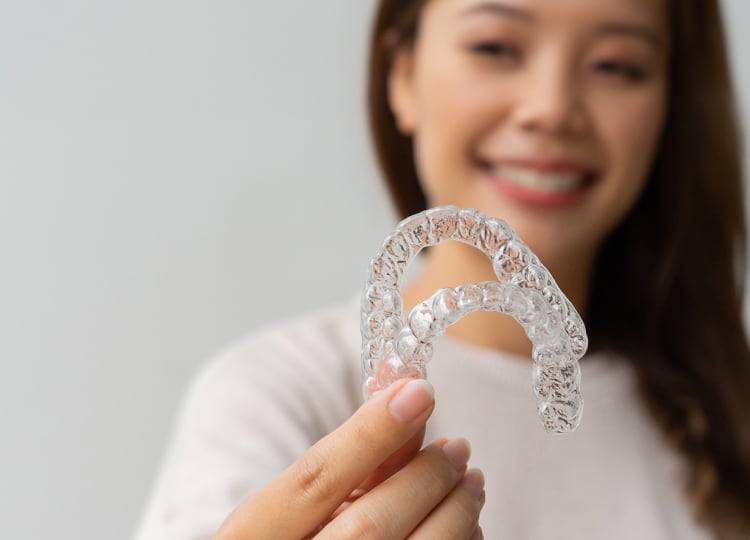
- A custom-fitted mouth guard that holds the lower jaw forward to keep the airway open
- No mask, no machine, no electricity required
- 81% of patients who have worn both prefer the sleep apnea mouth guard over CPAP
- 86% of patients report regular use of their device over three or more years
- Especially effective for mild to moderate obstructive sleep apnea and for patients who cannot tolerate CPAP
A treatment that gets used consistently produces better real-world outcomes. For the right patient, a sleep apnea mouth guard is a proven, durable solution. It is not a replacement for CPAP in every case, and Alterna Sleep works with your physician to help determine which path makes the most sense for your diagnosis.
-
Does Insurance Cover a Sleep Apnea Mouth Guard?
Coverage is the most common question patients ask, and the answer is generally yes for custom devices. Here is what to know:
- Most major commercial insurance plans cover oral appliance therapy for obstructive sleep apnea
- Medicare and Tricare are included
- The device must be custom-fabricated to qualify; prefabricated and over-the-counter options are not covered
- Coverage is billed through medical benefits, not dental benefits
- Alterna Sleep pre-authorizes each patient before treatment begins to confirm coverage upfront
What a patient pays out of pocket depends on their individual plan, including any unmet deductible, copay, or coinsurance. Use the coverage check tool on this site to learn what your plan includes.

-
Why Patients Choose a Custom Mouth Guard for Sleep Apnea
For patients who need an alternative to CPAP, the practical advantages of a custom sleep apnea mouth guard are straightforward:
- No mask, no hose, no machine noise
- Fits in a pocket, easy to travel with
- Works in any sleep position
- No electricity required
- No replacement parts or resupply orders
- Quiet, so it does not disturb a bed partner
Patients who have struggled with CPAP therapy often find a sleep apnea mouth guard much easier to maintain over time.

-
Get a Sleep Apnea Mouth Guard at Alterna Sleep
If you have been diagnosed with sleep apnea and are wondering whether a mouth guard could be the right fit for you, or if CPAP therapy has not been a sustainable long-term option, Alterna Sleep can help you find your next step. Our providers work exclusively in oral appliance therapy for sleep apnea, and we work with most major insurers to make treatment accessible. Contact our team to schedule a consultation, and we will begin the insurance verification process right away.
-
Frequently Asked Questions
After the fitting appointment, the device is fabricated at a dental lab and then adjusted at a follow-up visit. Alterna Sleep manages the timeline throughout and keeps patients informed at each step.
Yes. Dual therapy is an appropriate treatment option in some cases and may allow CPAP pressure settings to be reduced. This is always determined in coordination with your physician.
Custom sleep apnea mouth guards frequently reduce or eliminate snoring as a secondary benefit of keeping the airway open. Treatment is focused on the underlying OSA diagnosis, and snoring reduction is a common outcome, though individual results vary.